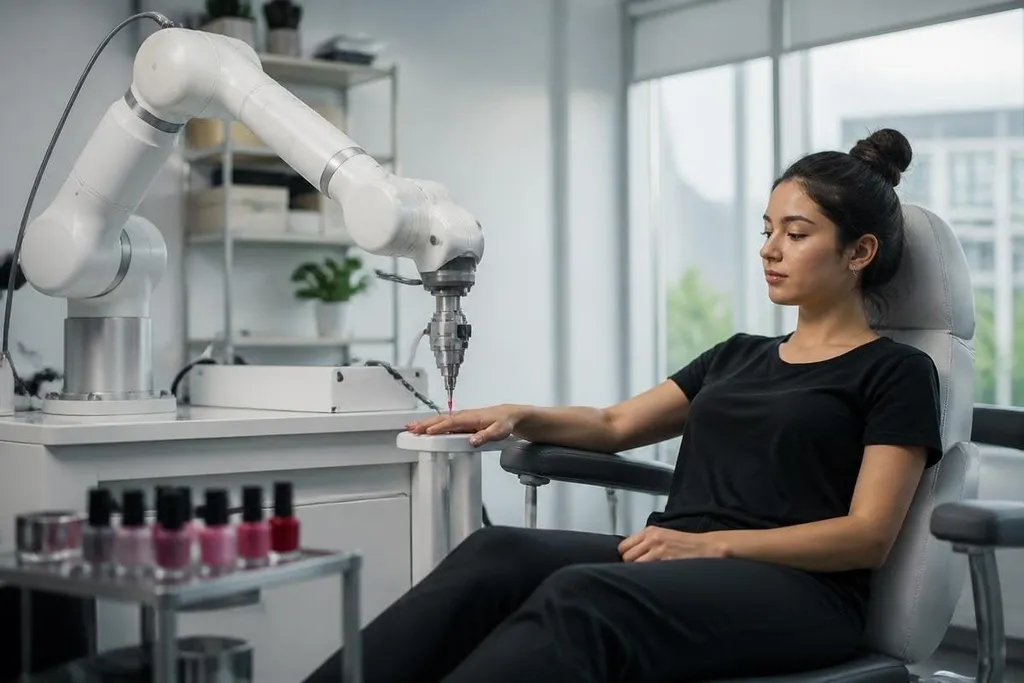
A beauty robot can paint nails, wash hair, apply makeup, or help with skin care. The hard part is showing that it can do one of those jobs safely, repeatedly, and at a price people can pay.
This article has no supplied evidence pack, so it would be wrong to name a company, product, date, or result as the biggest breakthrough. A useful list needs proof before praise.
- Name the task: say exactly what the robot does, from nail painting to hair washing.
- Show repeat use: give the number of sessions, people, or items completed.
- Publish the cost: include the machine price, service fee, or a clear reason the figure is not available.
What counts as a breakthrough
Beauty work is close to the body. That changes the test. A robot that moves a box can stop when its path is blocked. A robot working near eyes, skin, hair, or fingers needs a safer response and a clear way for a person to stop it.
The task also has to be defined. “Applies makeup” covers too much ground. Does the system place one product on one marked area, or can it work with different faces, skin tones, hair types, and user choices? Those are separate claims and need separate proof.
A useful report should name the tool at the end of the robot arm, the camera or sensor that guides it, and the limits set in software. It should also show what happens when the person moves, the product runs out, or the robot loses track of the target.
The evidence a buyer should ask for
A short video can show that a task is possible. It can't show how often the task fails unless the maker gives the full test record. Look for an uncut run, the number of attempts, and the number of errors.
Cost matters just as much. A salon owner needs the purchase price, setup cost, service plan, and time needed between clients. A home buyer needs the same facts in a smaller form. A machine that takes 20 minutes to prepare may change the daily work more than a faster arm does.
A useful report on a beauty robot should connect its claims to a working demo and named company records. Beauty robotics reports from Robot24.com can place those facts beside the control and privacy questions that come next.
The strongest report also names the person who stays in control. Is a stylist present? Can the user stop the arm by hand? Does the system record images of a client’s face? Those details affect safety, privacy, and the cost of each session.
Where the claims can fail
Beauty robots face limits that a product video may leave out. Hair changes shape. Skin has different textures. Faces move. A nail is small, curved, and attached to a moving hand. A robot may work well with one setup and fail when the person changes position.
The maker should state the tested range. That can include the number of clients, the types of products, the lighting, the body position, and the time between sessions. Without those details, “works for everyone” has no useful meaning.
I’d skip any beauty robot whose maker shows a polished demo but gives no failure rate, price, or safety process.
A buyer’s check before calling it a breakthrough
Use this list before a purchase, partnership, or press claim reaches your desk:
- Task limits: Write down the exact action the robot performs and the actions it does not perform.
- Test record: Ask for the number of runs, failed attempts, human interventions, and successful sessions.
- Safety controls: Check the stop button, speed limits, force limits, staff training, and recovery steps after an error.
- Client data: Find out what images or measurements the robot stores, where they go, and how long they stay there.
- Money and time: Add the robot, installation, service, consumables, cleaning, and time per client.
- Open claim: Mark every result the maker has shown only in a controlled demo.
These checks turn a broad claim into a decision. They also show which machines deserve more reporting when source material becomes available.
The next useful beauty robotics story needs one named system, one defined task, a dated test record, and a price. Until those facts arrive, the biggest breakthrough is still an open question.